Numberblocks: Card Fun!
Blue ZooEducational
2.95.00 Reviews
- Version
- 1.4.2
- Installs
- 10.00K
- Age Rating
- Everyone
Screenshots
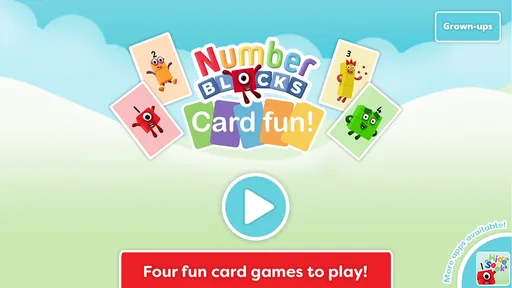
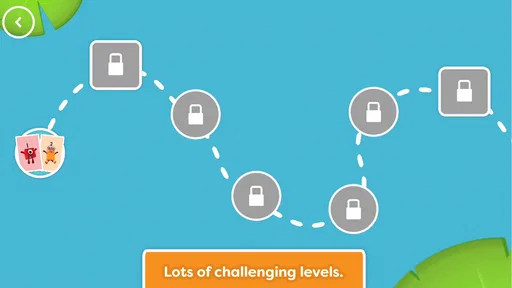
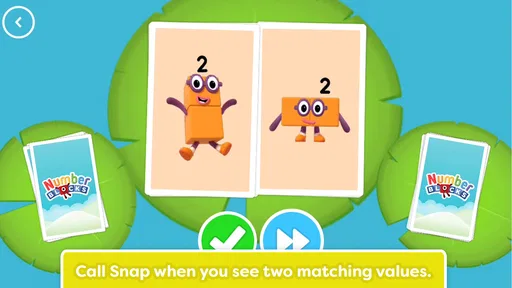
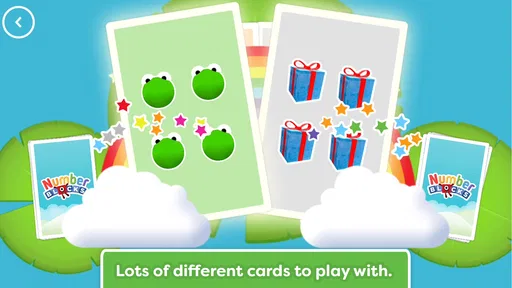
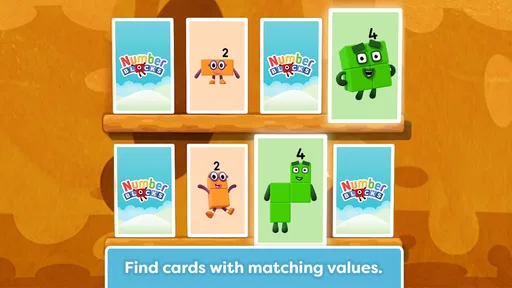
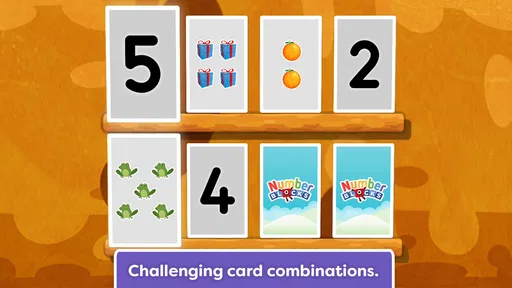
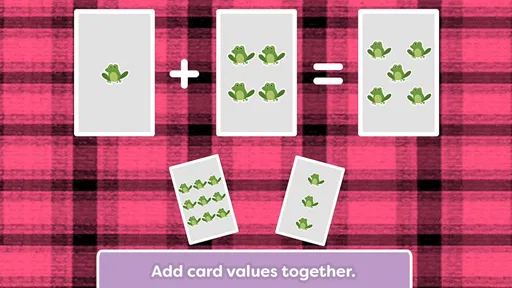
Our Review of Numberblocks: Card Fun!
 Analysis by Appyee
Numberblocks: Card Fun! is the kind of educational game that makes a good first impression quickly. It takes the familiar Numberblocks theme and turns it into a card-based activity aimed at helping young children become more comfortable with numbers. I found the experience easy to understand, friendly in tone, and better suited to short, focused sessions than long stretches of play. That matters because early number practice works best when it feels manageable rather than like another lesson.
Developed by Blue Zoo, this paid educational game costs $3.49 and is rated for Everyone. It is available for devices running Android 8.0 or later, with version 1.4.2 listed as the current version. The app has passed the initial discovery stage with over 10 thousand installs, although its average rating of 2.9 from around 90 ratings suggests that families should approach it with realistic expectations rather than assuming the Numberblocks name guarantees a perfect experience.
My main question was not whether a child might enjoy it during the first few plays. The characters and simple card concept make that fairly likely for children who already like Numberblocks. The more useful question is whether it deserves a regular place on a family device after the novelty fades. My answer is qualified: it can earn that space for a particular kind of learner, especially when an adult uses it as a brief practice tool, but it is not a complete replacement for broader number games, hands-on counting, or an app with a deeper long-term progression system.
What the first week feels like
The strongest part of the early experience is accessibility. A child does not need a long explanation before trying the game. Cards provide a natural bridge between recognition and action: the child sees a number-related prompt, makes a choice or completes the activity, and receives an immediate reason to continue. That simplicity is valuable for preschool and early-primary learners who may lose interest when an educational app presents too many menus, rules, or unrelated rewards.
I would introduce it during a quiet five-minute window rather than handing it over as an all-evening activity. A useful first session might happen after school while a parent prepares a snack. The child can complete a few rounds, talk through the numbers aloud, and then stop before attention turns into frustration. This approach also lets an adult notice whether the child is actually reasoning about quantities or simply tapping the most familiar visual option.
The best early benefit is the low barrier between seeing a number and talking about it. That makes the game useful for children who know some number names but still need practice connecting symbols, order, and quantity. I would not treat a correct answer alone as proof of understanding. Instead, I would ask questions such as “How did you know?” or “What would come next?” The game becomes more valuable when it starts a short conversation rather than replacing one.
The Numberblocks presentation is also an important part of the first-week appeal. Children who already recognize the characters may be more willing to repeat an activity than they would be with a plain worksheet-style app. That emotional familiarity can lower resistance, particularly for a child who says they dislike maths but enjoys the show or its visual language. On the other hand, a child with no interest in Numberblocks may not receive the same motivational lift, so the theme should be considered part of the product’s usefulness, not just decoration.
Who is likely to enjoy it immediately?
I see the clearest fit for young children beginning to build number literacy, especially those who benefit from visual prompts and short repetitions. It may work well as a parent-guided activity, a calm option for travel, or a quick warm-up before counting objects at home. It is also a reasonable choice for families who prefer a paid app with a simple purpose instead of a free game surrounded by advertising or aggressive in-app prompts.
The age rating of Everyone makes it broadly approachable, but that does not mean every child will find the challenge appropriate. A child who is still learning the earliest numbers may need an adult nearby to explain what is happening. A more advanced child may understand the central ideas quickly and begin looking for something with more varied puzzles. In both cases, the first week should be treated as a trial of fit rather than a commitment to a daily routine.
How it compares with familiar alternatives
Compared with paper flashcards, the game offers more immediate interaction and a character-led presentation. That can make repetition feel less formal. Paper cards still have one major advantage: an adult can change the question instantly, ask for physical objects, or adapt the difficulty without being limited by the app’s design. For children who need movement and real-world counting, a short screen session followed by blocks, buttons, or fruit on a plate may teach more than either method alone.
Compared with broad early-learning suites, Numberblocks: Card Fun! appears more focused. That focus can be a strength because the child is less likely to drift into letters, songs, or unrelated mini-games. It is also the reason I would not choose it as the only educational app on a tablet. A wider suite may offer better variety across counting, shapes, patterns, and problem-solving, while this game is more useful when the specific goal is number practice.
Whether the value survives repeated play
After the first month, the question changes. Initial excitement is easy to create with recognizable characters and a clear card format; lasting value depends on whether the child can return without the activity becoming automatic. I would expect the game to remain useful when it is placed inside a small routine rather than presented as an unlimited source of entertainment. Two or three brief sessions a week can give it a defined purpose without making it feel like a compulsory worksheet.
A practical routine is to use the game before a related offline activity. For example, a child might play for a few minutes, then count toy cars, compare two groups of socks, or arrange objects in numerical order. This creates a transfer step: the child has to use the idea away from the screen. That is one of the most important ways to protect the app from becoming passive tapping. If the game is used alone, its recurring value depends much more heavily on how much variety the child perceives in the cards.
Another useful habit is to let the child explain one answer each time. This takes almost no preparation, but it reveals whether the activity is building understanding or merely recognition. If a child repeatedly answers correctly but cannot describe the quantity, sequence, or comparison involved, I would reduce the frequency and add physical counting. If the child can explain the answer and enjoys returning, the game is doing a better job as a reinforcement tool.
The paid model affects the long-term decision in a straightforward way. At $3.49, the cost is modest compared with many physical learning resources, but it still creates an expectation that the app should remain useful beyond a single novelty session. I would consider that price reasonable for a child who already responds well to Numberblocks and needs extra number practice. I would be more cautious for a family buying it simply because the character brand is familiar, especially if the child already has several similar learning games.
Its audience also matters when interpreting the public response. The app has around 90 ratings and an average of 2.9, with five written reviews shown. That is not enough information for me to treat the score as a complete verdict, but it is enough to recommend testing the experience with the intended child early. A game can be a good match in one household and a poor one in another because attention span, existing number knowledge, and expectations differ so much at this age.
Three ways to get more from the card format
Pause before the child taps. Ask them to predict the answer or describe the card in their own words. This turns recognition into reasoning and helps an adult see what the child understands.
Use a real object after a digital round. If the activity involves a number, place that many blocks, pencils, or snacks nearby. The comparison exposes whether the child can connect the screen’s symbols with actual quantities.
Rotate the adult’s role. At first, guide the child closely; later, watch quietly and only ask about an answer that seems guessed. This avoids taking over while still preventing repeated mistakes from becoming a habit.
These steps are more important than simply increasing play time. The game’s lasting contribution is likely to come from repetition with conversation, not from leaving it open for long periods. That is also why I would avoid using it as a background distraction. If a child is tired, hungry, or rushing through cards, the educational return falls quickly.
Maintenance, friction, and the point where fatigue appears
Maintenance is relatively light in one sense: there is no need to prepare cards, sort pieces, or clean up a table. A parent can open the game and begin a short activity quickly. That convenience helps on busy mornings or during travel. The trade-off is that the adult has to supply the adaptation. A physical game can be changed on the spot; a digital activity asks the parent to decide when to stop, when to explain, and what offline task should follow.
I would also keep expectations modest around progression. This is a focused card game, not a full curriculum with the breadth of a classroom or a comprehensive learning platform. If a child needs work on addition, subtraction, written numerals, measurement, or word problems, another resource will eventually be necessary. The app can support the foundation, but it should not be mistaken for a complete mathematics program simply because it is educational and character-led.
Fatigue can arrive in several ways. The first is repetition without a visible new goal. A child may enjoy the opening sessions but lose interest if the same type of response continues to feel identical. The second is difficulty mismatch. If the child already recognizes the relevant numbers confidently, the activities may stop feeling rewarding; if the child is not ready, repeated errors can make the characters less comforting than intended.
The third source of fatigue is adult overuse. Because the game is easy to start, it can become the default whenever a child needs occupying. That may produce more screen time without producing more learning. I would reserve it for a specific purpose: a short number warm-up, a calm transition, or a reinforcement activity after a real-world counting exercise. This simple boundary gives the game a better chance of remaining welcome.
Families should also think about device fit. The minimum operating system is Android 8.0, so older devices may not be suitable. On a shared tablet, the practical issue is less about technical ambition and more about whether the child can use the screen comfortably and whether an adult can sit nearby for the first sessions. A small or awkward setup can make a simple activity feel harder than it needs to be.
When another option is better
I would skip this purchase if the child has no connection with Numberblocks and already ignores character-based learning games. I would also choose a broader educational app if the family wants one download to cover multiple subjects. For a child who learns best through touch, movement, or conversation, physical cards and household objects may offer more flexibility. And for a child who needs a clearly increasing challenge, a structured maths program with visible skill progression may provide stronger month-to-month motivation.
That does not make this game a weak choice. It makes the decision more specific. Its value is highest when the child is at the right early stage, likes the Numberblocks world, and benefits from repeated number exposure in small doses. The purchase makes less sense when the parent expects a deep game, a complete curriculum, or many months of independent play without guidance.
My long-term verdict
After the novelty fades, Numberblocks: Card Fun! earns a place as a supporting activity rather than a central learning system. I like its focused purpose, approachable presentation, and suitability for brief sessions. I also appreciate that the paid price keeps the decision relatively simple for families who want a targeted number game. The strongest results will come from using it deliberately and connecting its prompts to counting in the real world.
My reservations are equally clear. The middling average rating of 2.9 suggests that the experience will not satisfy every household, and the limited public review volume means I would not rely on the score alone. More importantly, the card format may lose its pull for children who need constant novelty or a stronger sense of progression. Without an adult adding questions and offline practice, the game risks becoming a sequence of quick answers rather than a meaningful learning routine.
For a Numberblocks fan who is beginning to develop number confidence, I would recommend trying it at the listed price, provided the family treats it as a short practice tool. I would start with supervised sessions, observe whether the child explains answers rather than guesses, and connect the digital cards to objects around the home. If that routine still feels useful after several weeks, the app has earned its space. If interest disappears once the character novelty settles, I would move on without guilt.
In my view, Numberblocks: Card Fun! succeeds when it stays small, purposeful, and shared. It is not the app I would choose for endless replay, advanced maths, or completely independent learning. It is the one I would keep available for a young learner who needs friendly, repeatable number practice and responds well to the Numberblocks style. That is a narrower promise than a full educational platform, but within that promise, it can remain worthwhile when paired with an adult, a few real objects, and a sensible stopping point.
Verdict
Strengths of Numberblocks: Card Fun!
- Bright, child-friendly cards make number recognition more engaging.
- Simple rules allow young children to start playing with little help.
- Short rounds suit limited attention spans and quick play sessions.
- Supports familiar Numberblocks characters in an interactive format.
- Useful for practicing counting, matching, and basic number relationships.
Limitations of Numberblocks: Card Fun!
- Limited challenge may reduce appeal for older or more advanced children.
- Repeated card activities can become predictable after frequent play.
- Some features may require in-app purchases or paid access.
- Gameplay offers little value for children unfamiliar with Numberblocks.
- Requires a compatible device and sufficient storage for installation.
Other Releases by Blue Zoo
View All
Meet the Numberblocks
Educational3.7

Numberblocks World
Educational3.6

Alphablocks World
Educational3.4

Numberblocks: Hide and Seek
Educational3.4
Similar Picks in This Category
View All
Little Panda Policeman
BabyBus4.0

Monster Trucks Game for Kids 2
Raz Games4.1

Little Panda's Chinese Recipes
BabyBus4.4

Little Panda's Restaurant
BabyBus4.4

Little Panda's Ice Cream Games
BabyBus4.3

Baby Panda Care
BabyBus3.8
Frequently Asked Questions
What is Numberblocks: Card Fun!?
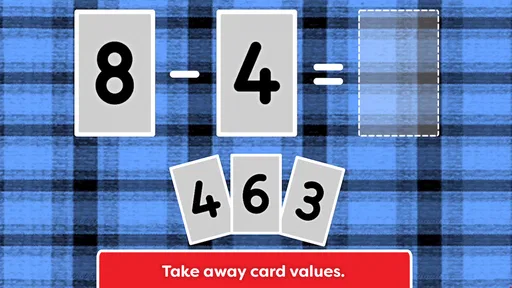
Numberblocks: Card Fun! is an educational card game for young children based on the popular Numberblocks characters. It introduces simple number recognition, counting, matching, and basic addition through short, colorful activities. The game is designed to make early mathematics feel playful and approachable, while familiar characters and visual feedback help children stay interested as they complete each challenge.
Is Numberblocks: Card Fun! suitable for my child’s age?
The game is primarily aimed at preschool and early-school children who are beginning to recognize numbers and understand simple quantities. Its suitability depends on your child’s current learning level, since some activities may be very easy for children already comfortable with counting. Younger players may benefit from adult guidance, especially when learning how to follow instructions or understand the mathematical relationships shown on screen.
Does Numberblocks: Card Fun! require an internet connection?
Many of the game’s activities can generally be used after installation without needing a constant internet connection, which is convenient for travel or play away from home. However, internet access may still be required for downloading the app, receiving updates, restoring purchases, or accessing certain store-related features. Availability can vary by device and version, so checking the current store listing is recommended.
Is Numberblocks: Card Fun! free to download, and are there in-app purchases?
The download model and available features may differ between Android and iOS, as well as by region. Some versions or sections may be free, while additional content could require a purchase or be included in a paid edition. Before installing, parents should review the app-store description, pricing information, and purchase settings to understand exactly what is included and prevent unexpected transactions.
Does Numberblocks: Card Fun! contain advertisements or collect personal data?
Because this is a children’s educational game, parents should review its privacy information and store disclosures before allowing regular use. The presence of advertising, analytics, or optional purchases can depend on the platform and version. It is also wise to configure parental controls, restrict payments, and check the permissions requested during installation so the app fits your family’s privacy and safety expectations.
Play our best games!


